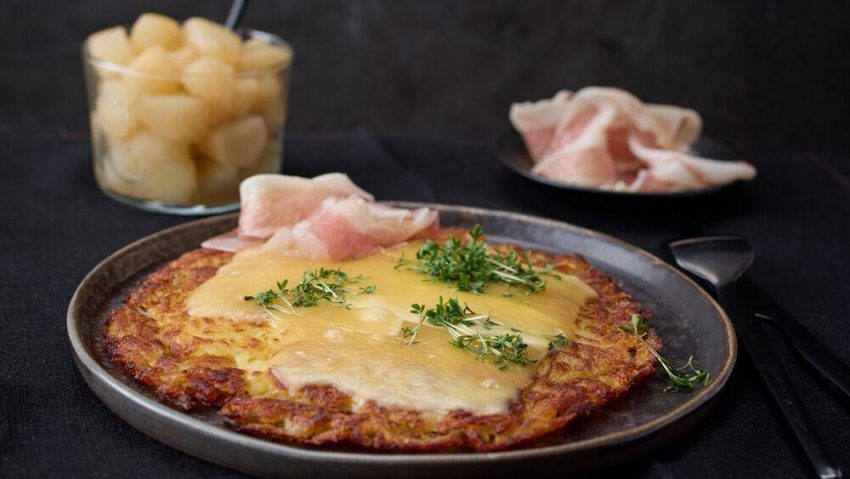
I traveled to Switzerland expecting mountains, chocolate, and unforgettable cheese. What I didn’t expect was to discover how useful an air fryer could be for enjoying some of the country’s favorite foods. Somewhere between a golden rösti and the ideas shared by Air Fryer Faz Tudo, I realized that exploring Swiss cuisine doesn’t always require a restaurant reservation.
I Came to Switzerland for the Scenery, but the Food Surprised Me
There’s something almost unreal about Switzerland.
The mountains look like postcards, the villages seem impossibly tidy, and even a simple train journey can feel like a sightseeing experience.
But as much as I was fascinated by the landscapes, I was equally curious about the food.
Before visiting, I imagined Switzerland as a country of bubbling cheese fondue, beautiful chocolate shops, fresh bread, and cozy mountain restaurants serving hearty meals.
And I wasn’t entirely wrong.
What I hadn’t appreciated was just how varied Swiss cuisine could be.
One region celebrates potato dishes, another is known for its cheeses, and somewhere else you discover recipes influenced by neighboring Italy, France, or Germany.
There is no single dish that can explain the whole country.
And as I explored the idea of preparing Swiss specialties in a holiday apartment, I found myself considering something rather unexpected.
Could a small air fryer make it easier to enjoy traditional Swiss flavors while traveling?
I had always associated air fryers with quick weekday dinners, frozen snacks, and convenient cooking at home.
But Swiss food changed the way I thought about them.
Not because every traditional dish belongs in an air fryer, but because several of the country’s best-loved specialties are surprisingly well suited to simple, small-batch cooking.
Discovering Rösti: Switzerland’s Most Convincing Argument for an Air Fryer
If there’s one Swiss dish that immediately caught my attention, it was rösti.
At first glance, it looks incredibly simple.
Grated potatoes are cooked until they form a golden, crispy cake, often served with eggs, cheese, vegetables, or meat.
But that simplicity is deceptive.
A good rösti depends on achieving the right contrast between a crisp exterior and a tender interior.
Traditionally associated with German-speaking Switzerland, rösti has become one of the country’s most recognizable dishes.
It’s also an excellent example of why I find Swiss food so appealing.
There are no extravagant ingredients hiding behind complicated techniques.
Just potatoes, seasoning, fat, and a little patience.
Why Air Fryer Rösti Makes So Much Sense to Me
Imagine returning to a holiday apartment after spending the day walking through mountain villages.
You’re tired, you’re hungry, and the idea of going back out to find a restaurant doesn’t seem particularly attractive.
Now imagine having some potatoes, a little butter or oil, and an air fryer.
A small rösti-style potato cake suddenly becomes a very realistic dinner option.
The circulating hot air can help create a golden surface without needing to fry the potatoes in a pan full of fat.
For a compact homemade version, cooked and cooled grated potatoes can be lightly seasoned, shaped into a shallow cake in an air-fryer-safe pan, and cooked at around 190°C (375°F) for approximately 15–22 minutes, depending on thickness and moisture.
It’s important to check the result and adjust the time to the appliance.
The outcome won’t necessarily have the same rich, buttery crust as a traditional skillet rösti.
But that’s what makes the experience interesting.
I don’t need a perfect reproduction of a restaurant dish to appreciate its flavors.
Sometimes, making a simple version myself helps me understand why a particular food has become so popular.
And rösti feels like exactly that kind of discovery.
Raclette: The Swiss Cheese Experience I Wouldn’t Want to Miss
You can’t really explore Swiss food without talking about raclette.
There’s something wonderfully comforting about warm, melted cheese poured over potatoes and served with pickles and small onions.
It’s a meal that seems designed for cold weather, mountain views, and long conversations.
Raclette is especially associated with the canton of Valais, where the cheese and its traditional preparation have deep regional roots.
The classic experience involves melting the surface of the cheese and scraping it onto the plate.
Today, tabletop raclette grills are also widely used.
But could an air fryer be part of a raclette-inspired meal?
Surprisingly, yes.
An Air Fryer Can Help, but It Doesn’t Replace Raclette Tradition
I wouldn’t claim that melting raclette cheese in an air fryer is identical to watching it slowly soften beside a traditional heat source.
That process is part of the experience.
However, a small air fryer can be useful for preparing the potatoes or warming a portion of cheese in a suitable ovenproof dish.
A particularly practical approach is to cook small potatoes until tender, then briefly heat them with raclette cheese on top.
Because the cheese melts quickly, it needs close attention at a moderate temperature.
The cheese should always be contained in a heatproof dish rather than placed directly on an open basket where it could melt through.
And suddenly, a simple apartment dinner can capture some of the flavors that made Swiss raclette so memorable in the first place.
The potatoes, the cheese, the tangy pickles, and the contrast between warm and cold ingredients are still there.
Of course, I would absolutely recommend experiencing traditional raclette during a trip to Switzerland.
But I also love the idea of recreating a modest version after a long day of sightseeing.
For me, that’s where the air fryer becomes more than just a convenience.
It becomes a practical way to continue exploring local food.
Swiss Bratwurst: An Easy Meal After a Long Day of Exploring
Another Swiss food experience worth discovering is bratwurst.
Sausages appear in different forms throughout Switzerland, and regional varieties have their own ingredients, traditions, and ways of being served.
The St. Gallen bratwurst, for example, is a well-known specialty from eastern Switzerland.
What makes sausage especially convenient for travelers is that it doesn’t require an elaborate kitchen setup.
Paired with potatoes, bread, or a fresh salad, it can become a satisfying meal.
And this is another situation where an air fryer can be helpful.
Many sausages can be heated or cooked in an air fryer, although the exact method depends on whether they’re raw, precooked, or ready to eat.
For raw sausages, it’s essential to follow the product’s cooking guidance and check that the center reaches a safe temperature. As a conservative reference, ground-meat sausages should reach 71°C (160°F), while poultry sausages should reach 74°C (165°F).
What surprised me most about this idea wasn’t the technology itself.
It was how little equipment would be needed.
Instead of using several pans, a traveler could prepare a simple meal with a sausage, a portion of vegetables, and potatoes.
That’s especially appealing after a full day exploring Switzerland’s towns and trails.
And unlike an elaborate meal, it doesn’t require planning the entire evening around cooking.
Älplermagronen: Alpine Comfort Food Meets Modern Convenience
One of the Swiss dishes I find most interesting is Älplermagronen, sometimes described in English as Alpine macaroni.
It’s a comforting combination commonly made with pasta, potatoes, cream, cheese, and onions, often served with applesauce.
The dish is closely associated with Swiss Alpine food culture.
It reflects the kind of hearty cooking that makes sense in mountain communities, where filling meals and dairy products have long played important roles.
And while I wouldn’t attempt to prepare an entire traditional Älplermagronen dish from raw ingredients in an air fryer, the appliance offers another possibility.
Using the Air Fryer to Finish an Alpine Classic
Imagine preparing the pasta and potatoes using a stovetop, then combining them with cheese and cream in a small ovenproof dish.
A few minutes in the air fryer can help brown the top and create a lightly crisp cheese layer.
It becomes something like a small Alpine pasta gratin.
This is where I think people sometimes misunderstand the usefulness of modern cooking appliances.
An air fryer doesn’t have to prepare every part of a meal.
It can simply handle the final step.
And for someone staying in a holiday rental, that kind of flexibility is valuable.
You can use the stovetop for the ingredients that need boiling and the air fryer for browning or reheating.
The result is a convenient way to enjoy flavors inspired by Swiss comfort food without trying to force an unsuitable cooking method onto every ingredient.
I also appreciate that this approach respects the original dish.
The air fryer isn’t presented as a replacement for Alpine culinary traditions.
It’s simply a tool that makes a small homemade version easier to manage.
What About Swiss Cheese Fondue?
This is where I’d draw the line.
Fondue is one of Switzerland’s most iconic food experiences, and I wouldn’t recommend trying to replace its traditional preparation with an air fryer.
Cheese fondue requires controlled heating and careful mixing to create its characteristic consistency.
A conventional fondue pot, or caquelon, is much better suited to the job.
The air fryer uses circulating hot air, which is excellent for browning and crisping but isn’t the ideal method for preparing a smooth cheese fondue.
And there’s another reason I’d keep fondue traditional.
The experience is part of the appeal.
Sitting around a shared pot, dipping pieces of bread into warm cheese, and taking your time feels very different from preparing a quick meal alone.
As a tourist, those experiences are exactly what I’d want to seek out.
So although I enjoy the convenience of modern kitchen technology, I wouldn’t want it to replace every culinary tradition.
Some foods are worth experiencing in the way they’ve been enjoyed for generations.
The Unexpected Advantage of Cooking in a Swiss Holiday Apartment
Switzerland is a wonderful destination for people who enjoy food.
But eating out for every meal can become a significant part of a travel budget, particularly during longer stays.
That’s one reason I find the idea of self-catering accommodations so appealing.
A holiday apartment with a properly equipped kitchen allows travelers to discover local supermarkets, buy regional ingredients, and prepare some of their own meals.
And those shopping experiences can be surprisingly interesting.
Instead of looking only at restaurant menus, you begin noticing different cheeses, breads, potato products, seasonal vegetables, and regional specialties.
You start recognizing ingredients that appear in traditional dishes.
It’s another way of learning about a country.
An air fryer can make the experience more convenient, provided the accommodation actually has one and permits its use.
I certainly wouldn’t assume that every Swiss holiday apartment includes an air fryer.
But where one is available, it can make small meals easier to prepare.
There’s less need to heat a large oven for a single portion, and many preparations require fewer cooking utensils.
For a solo traveler or a couple, that’s particularly useful.
And perhaps most importantly, it makes cooking feel less like a chore.
The Foods I’d Choose for a Simple Air Fryer Dinner in Switzerland
After thinking about the different Swiss specialties, I’d put together a very uncomplicated dinner.
I’d start with crispy rösti or small roasted potatoes.
Then I’d add a little melted raclette cheese or a regional sausage, depending on what I’d found at the local supermarket.
A fresh salad or some vegetables would bring balance to the meal.
And for dessert?
I’d probably buy a piece of Swiss chocolate or something freshly prepared from a local bakery.
Not everything needs to come out of the air fryer.
That’s something I particularly like about using modern cooking technology while traveling.
It can help with the practical parts of a meal while leaving room to enjoy foods made by local producers and traditional businesses.
In fact, I think that’s a much better approach than trying to recreate an entire country’s cuisine with a single appliance.
Use it where it works.
Choose traditional methods where they matter.
And don’t forget that exploring local food means more than cooking.
It also means visiting bakeries, markets, cafés, restaurants, and small producers.
Is Air Fryer Cooking Really Faster Than Traditional Methods?
One thing that surprised me when I started thinking seriously about air fryer cooking was how much the answer depends on what you’re making.
For small portions of potatoes, vegetables, or foods that need crisping, an air fryer can be convenient because it often heats up quickly.
It may also be more practical than switching on a large oven to prepare a single serving.
But for larger meals, it isn’t automatically faster.
A small air fryer basket may require several cooking batches.
Some dishes still need preparation in a saucepan, and others are simply better suited to an oven or skillet.
I also wouldn’t expect every Swiss dish to become healthier just because it’s prepared in an air fryer.
Raclette cheese remains rich cheese, and a hearty Alpine macaroni dish doesn’t suddenly become a light meal because the top was browned with hot air.
The real advantage is choice.
You can use less added fat for certain preparations, control ingredients, cook smaller portions, and simplify cleanup.
Those benefits are practical rather than magical.
And as a traveler, practical benefits are exactly what I appreciate.
Less Time Cleaning, More Time Exploring Switzerland
There’s something almost amusing about spending a beautiful day exploring Switzerland and then returning to your accommodation to face a sink full of dirty pots.
It’s not exactly the experience most tourists dream about.
That’s another reason an air fryer can be surprisingly useful.
Many small meals can be prepared using the basket and perhaps one additional heatproof dish.
After cooking, the removable parts are generally straightforward to clean once the appliance has been unplugged and allowed to cool.
Warm water, mild dish soap, and a nonabrasive sponge are usually sufficient, although the manufacturer’s instructions should always come first.
Of course, no appliance eliminates cleaning entirely.
But reducing the number of pans and trays can make a difference when you’d rather spend your evening planning the next day’s adventures.
And I can’t help thinking how welcome that convenience would be after a long Alpine hike.
The less time I need to spend washing dishes, the more time I have to enjoy the place I’ve traveled so far to see.
Does Modern Cooking Take Away the Authenticity of Swiss Food?
This is the question I kept returning to.
Switzerland takes enormous pride in its regional foods and culinary traditions.
And rightly so.
Rösti, raclette, fondue, and Älplermagronen aren’t just collections of ingredients.
They’re connected to particular places, customs, and ways of life.
But does that mean every preparation must remain unchanged forever?
I don’t think so.
To me, there’s an important difference between respecting a tradition and insisting that nobody can ever adapt it.
A rösti made in an air fryer isn’t necessarily identical to one cooked in a traditional skillet.
A raclette-inspired potato dish is not the same as having melted cheese scraped from a wheel at a mountain restaurant.
And a small pasta gratin prepared in a holiday apartment doesn’t reproduce the entire history of Alpine cooking.
But those differences don’t make the experience meaningless.
Sometimes adapting a dish allows us to appreciate its ingredients more closely.
Sometimes a simpler cooking method makes us curious enough to learn about the traditional version.
And sometimes we just want a convenient dinner that reminds us of something delicious we discovered during the day.
As long as we’re honest about what we’re making, I don’t see that as a problem.
What Cooking Swiss Food Taught Me About Traveling
The more I think about food and travel, the more I realize that the best experiences aren’t always the most elaborate.
Of course, I love the idea of enjoying fondue in a mountain restaurant or tasting raclette prepared in the traditional way.
Those are experiences I would never want to miss.
But there’s something appealing about the quieter moments, too.
Shopping for ingredients in an unfamiliar supermarket.
Learning the names of local cheeses.
Discovering that a dish made from potatoes and a few simple ingredients can be incredibly satisfying.
Or preparing a small meal after a day spent exploring a new country.
Modern technology can make those moments easier.
Not because it replaces culture, but because it helps us participate in everyday food experiences.
And for me, that is one of the most interesting parts of traveling.
Understanding what people eat doesn’t always require a formal restaurant experience.
Sometimes it starts with a grocery store, a little curiosity, and a very simple kitchen.
Frequently Asked Questions About Swiss Food and Air Fryers
Can you cook traditional Swiss food in an air fryer?
Yes, several Swiss-inspired preparations work well in an air fryer, including small rösti, roasted potatoes, sausages, and cheese-topped dishes. However, some traditional foods, such as fondue, require other cooking methods.
Is rösti easy to make in an air fryer?
A small rösti-style potato cake can be cooked in an air fryer using a suitable pan or mold. The result may be crispy and golden, although its texture can differ from traditional skillet-cooked rösti.
Can you melt raclette cheese in an air fryer?
Yes, small portions of raclette cheese can be melted in a suitable heatproof dish or over cooked potatoes. Close supervision is important because the cheese can melt and brown quickly.
What are the most popular traditional Swiss foods tourists should try?
Some of Switzerland’s best-known specialties include cheese fondue, raclette, rösti, Älplermagronen, and regional dishes such as Zürcher Geschnetzeltes. Swiss chocolate, cheese, and breads are also important parts of the country’s food culture.
Is an air fryer useful in a Swiss holiday apartment?
It can be very convenient for preparing small portions, reheating suitable foods, and reducing the number of cooking utensils. However, travelers should check whether their accommodation provides an air fryer and allows its use.
Does air frying make Swiss food healthier?
It can reduce the amount of added oil in certain preparations compared with shallow-frying or deep-frying. However, nutritional value still depends on the ingredients, portions, and overall meal composition.
Conclusion: My Most Unexpected Swiss Travel Discovery
When I first imagined traveling to Switzerland, I pictured snowy mountains, beautiful lakes, charming villages, and some of the best cheese I’d ever tasted.
An air fryer certainly wasn’t part of that picture.
Yet the more I explored Swiss cuisine, the more I appreciated how useful a simple modern appliance could be.
Crispy rösti, warm potatoes with raclette cheese, local sausages, and small Alpine-inspired gratins all showed me how traditional flavors can fit into a practical, modern kitchen.
Of course, I wouldn’t want to replace the experience of eating Swiss food in traditional restaurants.
The atmosphere, the history, and the people preparing those dishes are part of what makes them special.
But I also don’t believe that enjoying local cuisine has to mean eating out for every meal.
Sometimes the most memorable travel moments come from discovering ordinary ingredients and finding simple ways to enjoy them.
What surprised me most wasn’t that an air fryer could cook Swiss-inspired food. It was how easily it could turn a handful of local ingredients into a comforting meal after a full day of exploring.
And perhaps that’s the lesson I’d take home from Switzerland.
Great food doesn’t always require complicated equipment, expensive ingredients, or hours in the kitchen.
Sometimes, all it takes is a little curiosity, a respect for local traditions, and a practical way to bring those flavors to the table.